Pecunia non olet: the Roman emperor who taxed urine
What “pecunia non olet” really means, why Emperor Vespasian taxed the urine trade, and why French urinals are still called vespasiennes.
Every government eventually runs out of money. Most raise taxes on income, or land, or bread. Around AD 70, Rome looked at its public urinals and saw an opportunity.
The tax
Ancient Rome had a use for urine. Stale urine is a source of ammonia, and fullers and launderers used it to clean and whiten woollen togas. Tanners used it too. So the urine collected from public urinals was worth something, and people paid for it.
That made it taxable. The tax is often said to have started under Nero. What is certain is that Emperor Vespasian brought it back early in his reign, when the treasury needed refilling after years of civil war.
Strictly, it seems to have been a tax on the urine trade, not on the act of peeing. Nobody was charged at the door.
The coin
The story survives because of the historian Suetonius, writing in his Life of Vespasian. Vespasian’s son Titus complained that taxing public conveniences was beneath an emperor. Vespasian took a coin from the first payment, held it to his son’s nose and asked whether it smelled bad.
Titus said no.
“Yet it comes from urine,” said Vespasian.
That’s the whole anecdote. It is short, practical and slightly disgusting, which is roughly how most people remember Vespasian.
The slogan he never said
Here is the catch. The famous Latin line, pecunia non olet, “money doesn’t stink”, does not appear in Suetonius. The ancient sources give the sense of the story, not the slogan. A similar account appears in the historian Cassius Dio, also without the tidy Latin.
Nobody is quite sure when the phrase took its modern form. It is a later summary, and a very good one, which is why it outlived almost everything else Vespasian did.
What it means today
“Money doesn’t stink” now means that money is worth the same, wherever it came from. It is used with a shrug to defend income from dull, dirty or questionable sources. It is rarely meant as praise.
Why French urinals are called vespasiennes
The emperor’s name is still on the wall, in two languages:
- in Italian a public urinal is a vespasiano,
- in French it is a vespasienne.
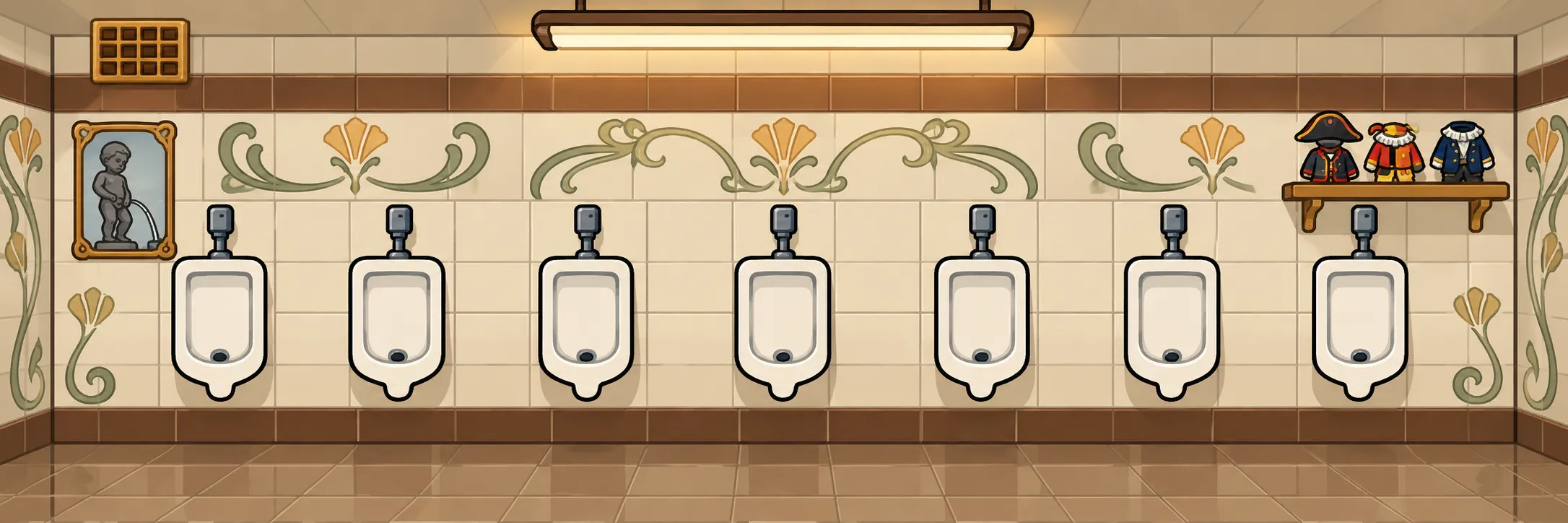
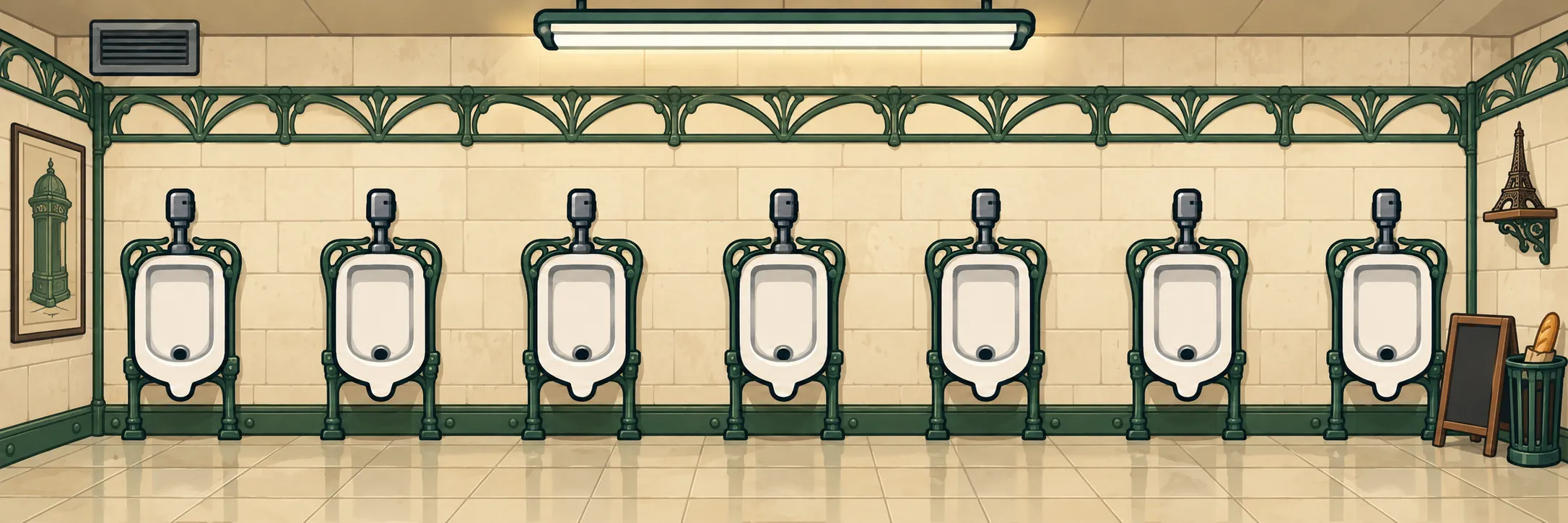
The French name comes from 19th-century Paris. The prefect Rambuteau filled the city with street urinals, which Parisians nicknamed colonnes Rambuteau. According to most accounts he preferred “vespasiennes”, after the man who had made urinals pay. It’s easy to see why he didn’t want his own name on them.
Paris put up hundreds of these street urinals from the 1840s. They were replaced by enclosed Sanisettes from 1980, and one historic pissoir is known to survive on Boulevard Arago.
Rome in the game
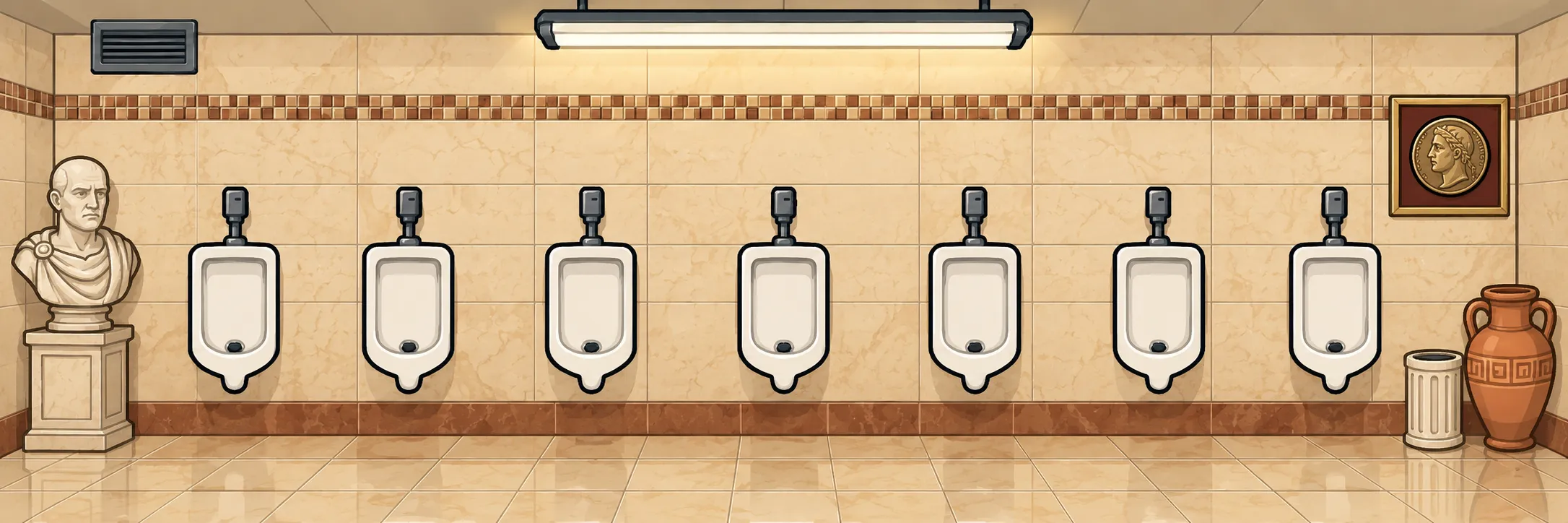
Rome Fiumicino is one of the European airports in Urinal Rules Forever. There’s a bust of the emperor on the wall. Tap it and the Field Notes put it plainly: “Emperor Vespasian, bald and unimpressed. He taxed this room. He’d tax you too.” There is also a coin in a frame. You know what to do with it.
For a much later idea about what to put in a urinal, read about the Schiphol fly. Or brush up on the unwritten rules before your next layover.
And next time a mate tells you his side hustle is “a bit grim”, send him this. Money doesn’t stink. Emperors said so.
Quick answers
What does pecunia non olet mean?
It is Latin for “money doesn’t stink”. It means money is worth the same whatever its source. The phrase is linked to Emperor Vespasian and his tax on the urine trade.
Did Vespasian really say pecunia non olet?
Not in those words. The historian Suetonius records Vespasian holding a coin to his son’s nose and saying it came from urine. The famous Latin slogan is a later summary of the story.
Why are urinals called vespasiennes in France?
They are named after Vespasian, the emperor who taxed urine. Italian has the same word: a public urinal is a vespasiano.
Sources